
Neural Therapy & C-Section Recovery: A Message for New Moms
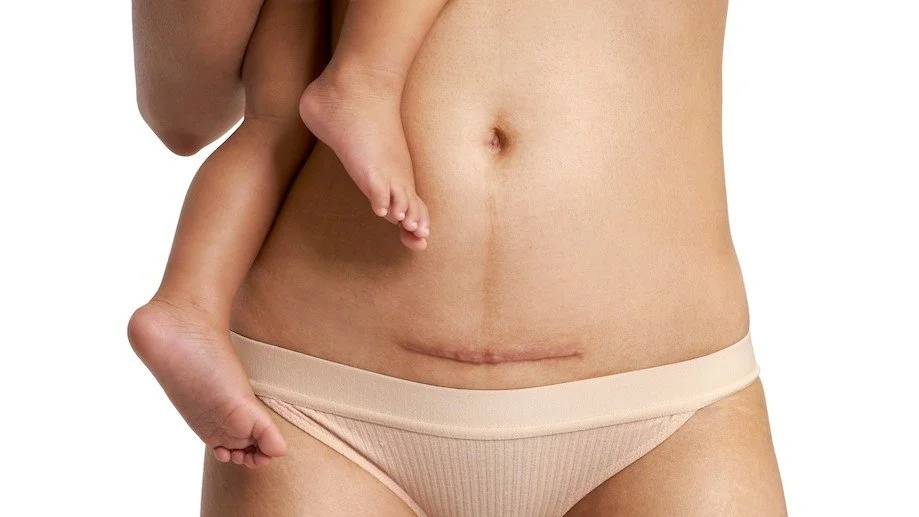
If you have recently had a caesarean section (C-section) and you are struggling with pain, there are things you should know, and things you can do to feel better now.
Important note: If your pain is severe, or it feels like something is not right, you should see your doctor to rule out serious potential causes.
The Hidden Impact of Pain
For postpartum pain, in addition to whatever else you do, you should treat all of your scars - not just the new ones.
This can be a beautiful and precious experience. That’s why it is so important to address preventable causes of pain. That pain can affect bonding and breastfeeding, by restricting movement, limiting sleep, creating anxiety and stress. Unlike most post-surgical patients, new moms rarely get to just rest. Their new job is full-time, full on!
Understanding the Trauma
The birth procedure can include several different sources and kinds of tissue trauma. The anesthetic, whether spinal or epidural, can sometimes traumatize tiny fibers in the ligaments of the spine. Pushing with contractions can strain or tear ligaments in the pelvis. Vaginal tears and episiotomy can injure the pelvic floor, including the tissues that hold the bladder and the colon in place.
The Mother’s Smile and the Nervous System
The caesarean section scar is often celebrated as “a mother’s smile” or a “battle scar” and a symbol of courage and reminder of the love and strength it takes to bring a child into this world. While this is a beautiful sentiment, it is also an important tissue injury, and deserves more attention by women everywhere. This small incision in your lower abdomen, which you should examine carefully when you take your first shower and remove the steri-strips on your skin incision, cuts through a fundamental pillar of your anatomy, and a primary hub in your autonomic nervous system.
This area is home to your pyramidalis muscles, which tether your sternum to your pelvis through the linea alba and the xiphoid, pull on the adductors of your thighs to align your posture. The genitofemoral nerves live here, and so do the sympathetic fibers that regulate stress in the pelvis and lower body. And the incision in the uterus, which commonly forms an indentation or niche, can irritate the surrounding nerve clusters (ganglia).
When these areas are disrupted, it can restrict movement, limit sleep, and create systemic anxiety—all of which can affect bonding and breastfeeding..
Steps for Recovery
To calm your nervous system and promote tissue healing, listen to a guided meditation once or twice per day. Even a brief 5-minute meditation can have a powerful impact on stress. Listen to relaxing music, another approach supported by some evidence. Essential oils and aromatherapy are also safe and were effective in a few small trials.
While you want to be careful with your skin wound in the first two weeks, gentle scar massage can also be helpful. There are plenty of resources that can guide you with this online. Consider taking vitamin C, one gram every 4-6 hours, to help build collagen, and some form of magnesium, which reduces tissue tension and can soften bowel movements too. Try to minimize the use of acetaminophen or NSAID drugs.
Treating the Root Cause: Neural Therapy
General approaches are important to know, and to use. But what is really more important, however, is to understand and treat the root causes. Every woman is different, with unique immune function, hormone and metabolic status, mental and emotional factors, and it is always important to consider which factors matter most in each individual.
One root cause that has been overlooked by medicine - including functional and integrative medicine in North America - is scars. The places where we have been injured before. Any scar can create long-lasting lesions in the body - an area where sensitized nerves and restrictions in fascia can pull and twist your body out of alignment. These include other scars on the abdomen, the pelvis or the legs, or even the ribs and chest, head, neck and arms.
Neural therapy is practiced by thousands of doctors worldwide. They use procaine and other local anesthetics, targeting scars, ganglia and other lesions, or interference fields, in the autonomic nervous system.
A Path to Healing
While I love neural therapy, I think the lesion is more important than the therapy. That’s why my practice is focused on improving surgical outcomes, to create awareness about treating blockages as a major potential healthcare advance.
I use neural therapy, hydrodissection and other injection procedures to release scars and blockages, restore alignment and balance, and to reset the body’s natural ability to heal itself. Realigning the long meridians of fascia that the Chinese, and many others, described so many centuries ago.
I have this message for new moms - Your blockages are unique to you, and this targeted approach is a powerful, gentle tool that is ideally suited to new moms struggling with pain. Now is the time to learn this about your body, so you can share it with your little one - and your whole family.
Join Our Upcoming FREE Live Webinar
Beyond the Scar: A Blockage-Based Protocol for treating Post-C-Section Trauma
Thursday, March 05, 2026 / 7:00 PM - 08:00 PM EST